What I Know About FibroScans

I have had 2 FibroScans during my journey with metabolic dysfunction-associated steatohepatitis (MASH). When I was first diagnosed, vibration-controlled transient elastography (VCTE) was not widely available, and I was not offered the option. Unfortunately, some people still have no access to a FibroScan.
How liver elastography works
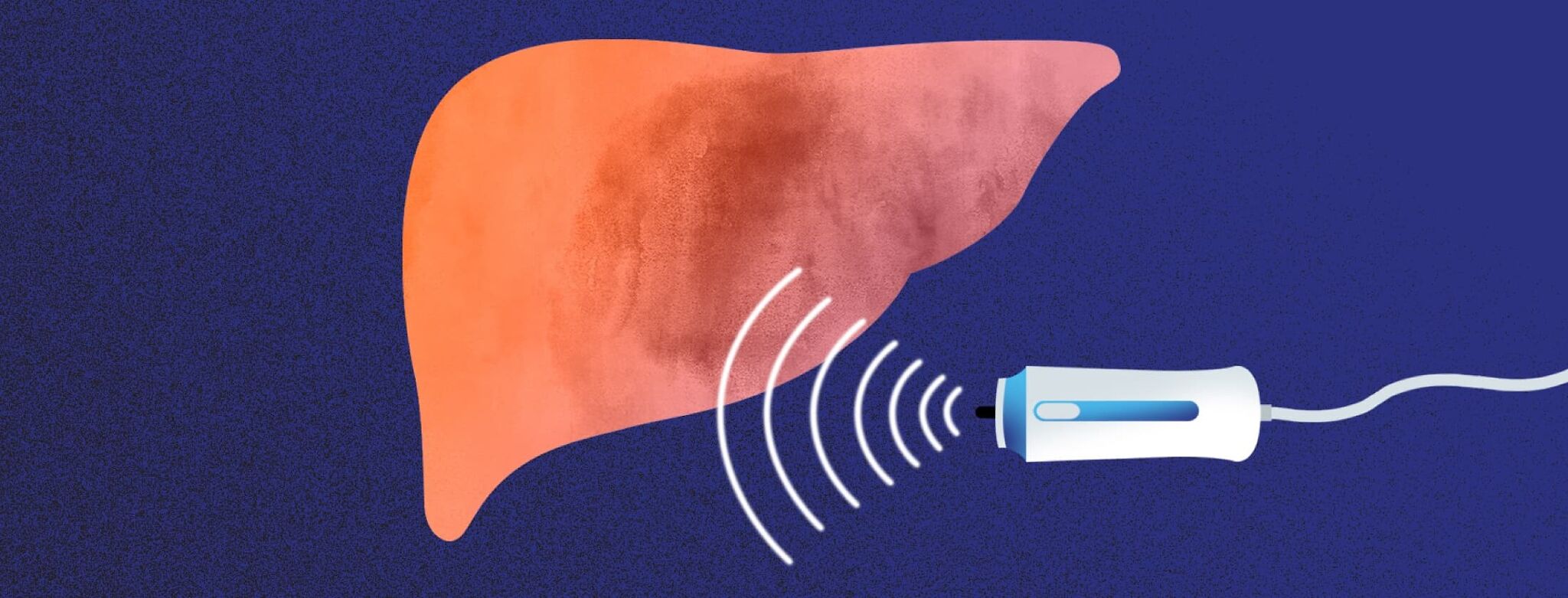
The FibroScan uses elastography to help diagnose liver damage. Elastography is a form of ultrasound; it bounces sound waves off your liver to create an image that can show your doctor what is happening inside.1 Since we often have no symptoms until our livers are extremely damaged, this noninvasive liver test is very important.
Sometimes, an MRE (magnetic resonance elastography) is ordered, which combines elastography with an MRI. It also uses sound waves, but it is a different test.2 It takes longer and provides more comprehensive imaging. Your physician determines which test is needed for your specific case.
Why should I get a FibroScan?
Most people consider liver stiffness measurement to be a good test for identifying liver damage associated with fatty liver disease. There are several reasons FibroScans might be a good option for you if you’re seeking a MASH diagnosis. Consider the following benefits:3

- It is a noninvasive procedure, meaning it doesn’t go through or into your body.
- It is painless and will not cause infection.
- There are no known risks associated with a FibroScan.
Until relatively recently, a liver biopsy was the only way to tell definitively that your liver was damaged. A liver biopsy is not painless and carries some risk of infection, bleeding, or injury.
Monitoring liver stiffness and fat content
A FibroScan measures liver stiffness and fat content. Remember that MASLD (formerly NAFLD) or MASH (formerly NASH) is caused by fat or lipids damaging your liver. Those wounds, called fibrosis, make our livers stiff. A FibroScan is a quick way to measure that stiffness. Whether it is part of your initial diagnosis or used for monitoring your liver to identify disease progression, it can offer fast identification of a damaged liver.1
Your doctor may order the ultrasound-based test and follow up with a liver biopsy, depending on the results. They may also order a liver biopsy as the first test to pinpoint exactly what is harming your liver. If you have liver cancer, for example, that may not be apparent from a FibroScan.1
I had liver cancer as well as cirrhosis by the time I was diagnosed, and my only symptom was low platelets in my blood. Many doctors used to be hesitant to order liver biopsies without symptoms. However, a FibroScan would have identified damage to my liver long before my diagnosis.
When a FibroScan might be less accurate
Some conditions make the test less accurate. For example, if you have ascites (fluid in your abdomen) or if your BMI is greater than 30, the test may be less accurate.4 Therefore, it is always the physician’s call as to which procedure is right for you.
What to expect during a FibroScan
A FibroScan is a very quick and painless procedure. When I had mine, I did not have to prepare for the test in any way. However, you may be asked to fast for a couple of hours prior to the appointment.
I was in my doctor’s office for my 6-month checkups, and part of the process was to have me:
- Lie on the exam table
- Raise my right arm
- Expose my abdomen
- Stay still for the procedure while occasionally holding my breath
The technician used a wand after putting gel on my abdomen. The gel is sometimes a little bit cold and wet. The wand is then moved across your abdomen until it reaches your liver, and the device is activated to emit sound waves that measure tissue elasticity.3
I couldn’t feel it at all, but sometimes people feel a very slight vibration. It really is a quick and easy test that takes about 10 minutes, and the results are available immediately.
Interpreting your FibroScan results
The one thing I would recommend is that you ask your physician to carefully explain the results to you, as they can be confusing. The results include 2 primary scores:4
- Liver stiffness measurement: This is a fibrosis or scarring score. It ranges from none to mild to advanced.
- CAP score: The controlled attenuation parameter (CAP) measures how much fat is in your liver and ranges from “healthy liver” to “severe steatosis” (abnormal fat).
By reviewing the image and your scores, your doctor can assess the severity of your liver disease and develop your treatment plan.
My final thoughts on FibroScans for MASH
A final word of caution: make sure your insurance will cover FibroScans, as some providers will not pay for them. Good luck! This is a relatively easy test that reveals a lot of vital information.
Join the conversation